
Speed Reducers for Humanoid Robots: What Every Joint Needs
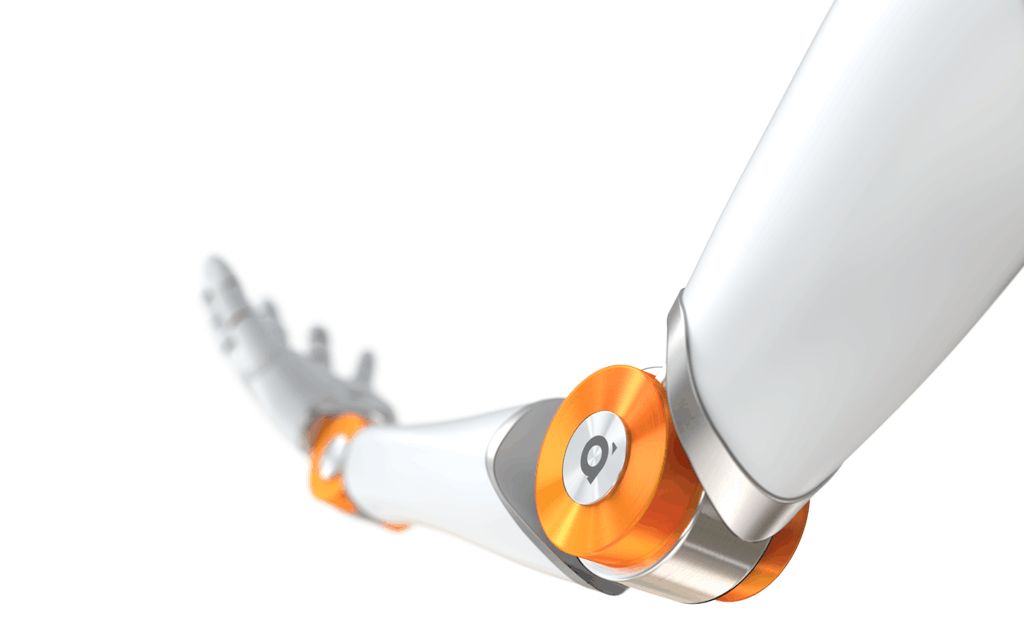
A humanoid robot carries 20 to 40 speed reducers, one per degree of freedom, and together they are the largest single line on the bill of materials after nothing. Joint actuators typically account for over 30% of a humanoid’s BOM cost. Choosing them well decides the robot’s precision, sound, safety and price. Choosing them badly gets multiplied by 40.
Why the speed reducer is the bottleneck component
Electric motors are fast and weak; joints need slow and strong. The speed reducer converts one into the other, and everything a humanoid does flows through that conversion. It sets:
- Precision. Joint backlash sums along the kinematic chain. Forty joints of “pretty good” is one robot of “not good enough”.
- Sound. Gear noise also sums. A humanoid in a warehouse can hum; a humanoid in a hotel lobby cannot whine. See quiet gearboxes for robot joints.
- Safety. Reflected inertia and backdrivability determine what a collision with a person feels like.
- Uptime. A seized joint strands the whole robot. Transmission wear is fleet maintenance economics.
- Cost and supply. At 20 to 40 units per robot, reducer unit cost and lead time scale straight into the business case.
Different joints, different asks
Hips and knees (legged platforms). Walking loads joints with impact forces at every step. This is shock territory: high torque density, high stiffness, tolerance for repeated peak loads. It is where quasi-direct-drive and cycloidal approaches earn their place, and where a transmission’s overload behaviour is tested daily. We covered this in humanoid joints part 1: legs and balance.
Arms and wrists. This is manipulation territory. End-effector accuracy is the sum of joint errors, so backlash matters most here, and it matters over the robot’s whole life, not just on delivery day. Mass matters double: every gram in a wrist is carried by the elbow and shoulder (the distal mass problem). Small diameter, low weight, zero backlash, quiet. More in part 2: arms and neck.
Torso and neck. Moderate loads, high visibility. A whining neck joint is the first thing a human notices from across the room.
Wheeled humanoids skip the hips-and-knees problem entirely and concentrate everything on arms and torso. That shifts the requirement mix toward manipulation precision, silence and safe contact, which is why we wrote a dedicated guide for wheeled platforms.

The requirements list, with numbers
For a manipulation joint on a modern humanoid, the realistic targets look like this:
- Lost motion: sub-arcmin per joint. The Archimedes Drive holds 0.2 arcmin maximum, for life.
- Efficiency: 80%+ under working load. Efficiency is battery life and heat budget. The Archimedes Drive measures 85%.
- Torque density: as high as the shock budget allows. 120 Nm from 0.8 kg at 65 mm diameter is the class to compare against.
- Noise: under conversation level at 1 m. Transmissions without tooth engagement start with a structural advantage.
- Overload: survivable without service. Micro-slip in a traction contact caps torque through temporary sliding without meaningful damage. A flexspline fracture, by contrast, is a repair ticket. See overtorque protection.
What scale-up changes
Prototypes forgive. Fleets do not. Three things dominate once a humanoid program moves from demo to deployment:
- Backlash over life becomes the spec that matters. A joint that ships precise and wears loose fails silently, robot by robot. Ask every reducer vendor for backlash-over-life data.
- Maintenance defines fleet economics. Lubrication schedules and wear-part replacement, times 40 joints, times the fleet.
- Supply becomes strategy. Precision reducer lead times have historically stretched to months. Second sources and manufacturing partnerships (our route: Linamar) decide whether a robot roadmap holds.
FAQ
How many speed reducers does a humanoid robot have?
Typically 20 to 40, one per actuated degree of freedom. Dexterous hands can push the count higher, usually with smaller, simpler transmissions.
What types of speed reducer do humanoids use?
Mixed by joint: quasi-direct-drive and cycloidal at high-shock leg joints, strain wave gears in compact wrists, and traction drives such as the Archimedes Drive where zero backlash for life, silence and collision tolerance drive the choice. See the full three-way comparison.
What is the biggest gearbox problem in humanoid robots?
For legged platforms: surviving impact loads. For manipulation: backlash growth over service life. For fleets: maintenance and supply at 40 reducers per robot.
Do humanoid joints need zero backlash?
Manipulation joints benefit most, because joint errors sum at the end effector. What matters more than the day-one number is whether it holds over the service life.