
What Is a Traction Drive Speed Reducer?
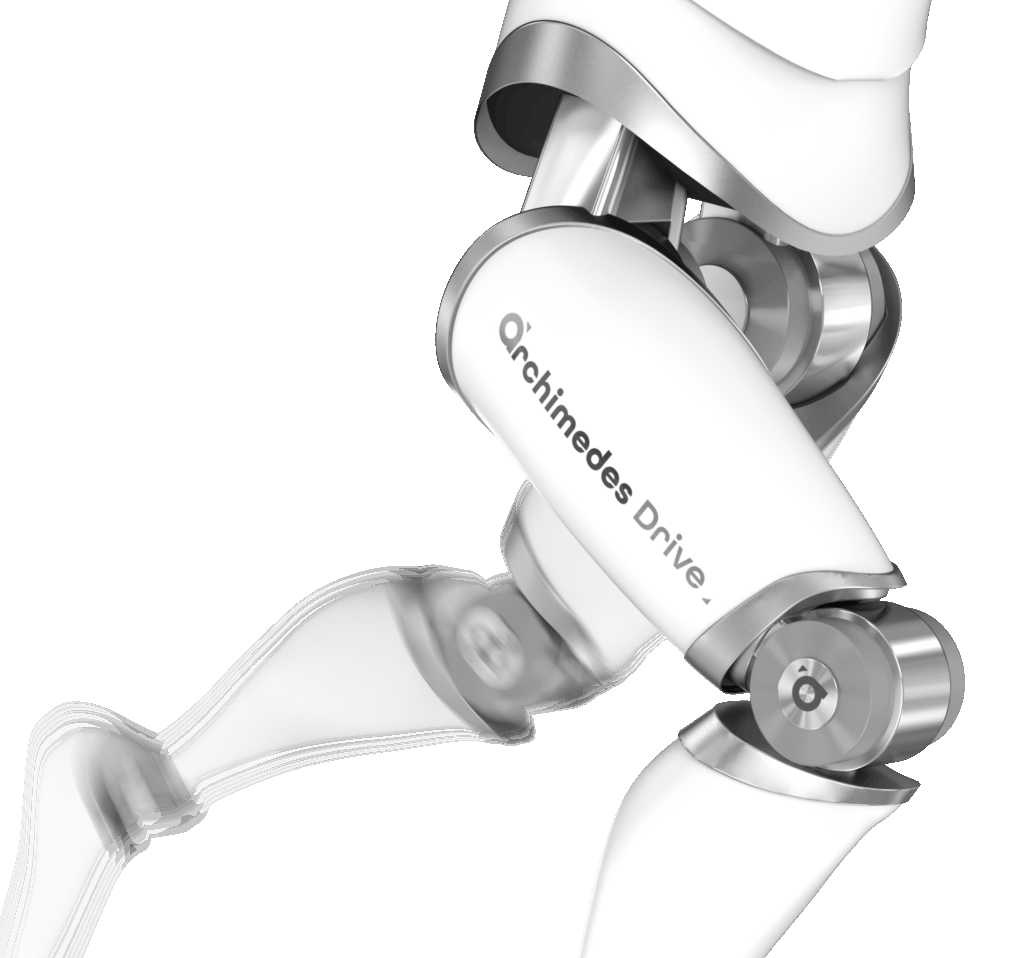
A traction drive speed reducer is a mechanical transmission that reduces speed and multiplies torque through smooth rollers in rolling contact, instead of meshing gear teeth. Torque transfers through friction at preloaded contact points, the same way a train wheel grips a rail. No teeth, no tooth backlash, no tooth wear.
Not to be confused with two neighbours that share the name: the electric traction drive (the motor-inverter system that propels trains and EVs) and traction gearboxes in rail vehicles (conventional geared units between traction motor and axle). This page is about the gearless speed reducer category.
How does a traction drive transmit torque?
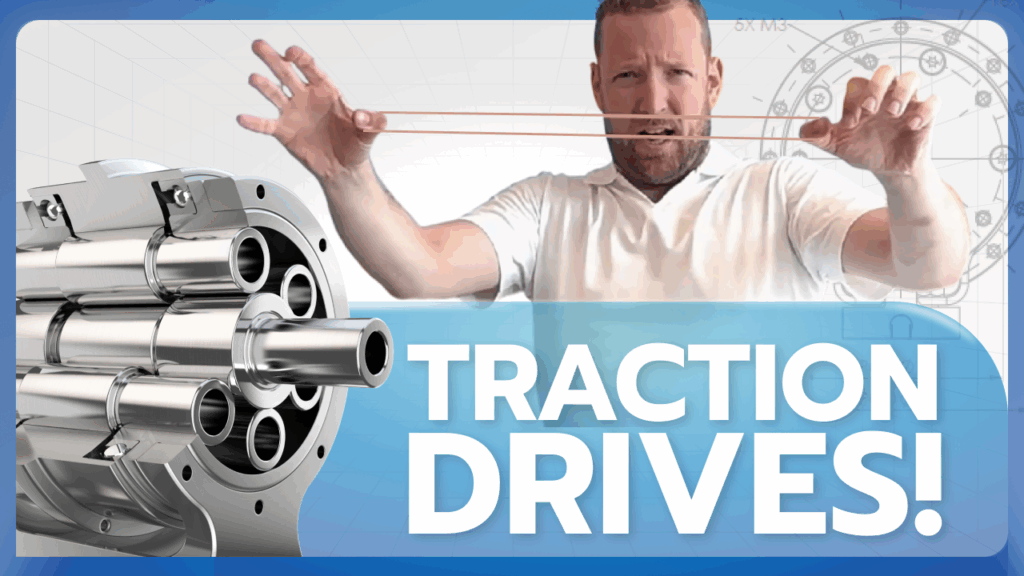
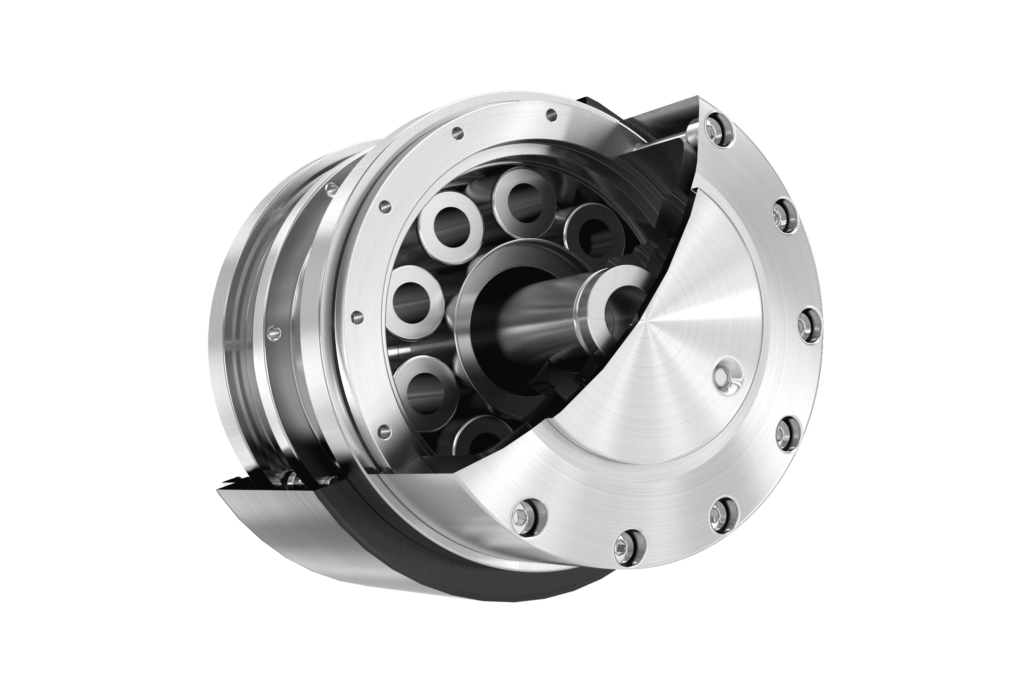
Press two smooth, hardened rollers together and rotate one. If the contact is preloaded correctly, friction carries the torque and the second roller follows with essentially no slip. A traction drive speed reducer arranges several such rollers in a planetary layout: a sun roller, planet rollers and an outer ring, with the reduction ratio set by their diameters.
Because the contact rolls instead of slides, three properties follow directly from the physics:
- No backlash. There is no clearance between teeth because there are no teeth. Reversal is seamless.
- Quiet operation. Gear noise is tooth-engagement noise. Rolling contact removes the source.
- Smooth torque transfer. No tooth-to-tooth handover, so no torque ripple from meshing.
The engineering challenge that kept traction drives out of mainstream use for decades was maintaining the right contact pressure at all loads. Too little preload and the contact slips. Too much and efficiency and lifetime suffer.
Where do traction drives come from?
The idea is more than a century old, and it has serious engineering pedigree. NASA studied multiroller traction drives in the 1970s and 1980s as speed reducers for gas-turbine engines, including the Nasvytis multiroller design that demonstrated fixed ratios around 14:1. Industrial traction drives have been used for continuously variable speed control for over 100 years. What changed recently is the demand side: robotics needs precision, silence and zero backlash at prices and volumes that gear-based precision reducers struggle to reach. We cover the full history in Archimedes Academy lesson 5.
What is the Archimedes Drive?
The Archimedes Drive is IMSystems’ patented traction drive speed reducer, a distinct third category of precision speed reducer alongside strain wave and cycloidal designs. It uses hollow, hardened-steel flexrollers whose controlled deformation maintains the traction contact preload. That solves the classic preload problem mechanically, without external clamping systems.
How the Archimedes Drive differs from a conventional traction drive: torque density. Classic traction reducers, from the NASA multiroller studies to industrial variable-speed units, were held back by how much torque a given package could carry before the contact slipped. The Archimedes Drive uses loaded spring planet rollers: the rollers themselves act as preloaded springs that keep the contact pressure exactly where the torque needs it. The result is the torque density that makes traction technology viable in a robot joint, delivering 100 Nm from a 58 mm, 0.55 kg core unit at 80-90% efficiency, with 0.2 arcmin maximum lost motion.
Two behaviours set this apart from gears in daily use:
- Zero backlash for life. Gear teeth wear into larger clearances over service life. Rolling contact has no teeth to wear, so lost motion stays at its 0.2 arcmin maximum for the life of the drive.
- Overtorque protection is built into the physics. Beyond the design torque the contact micro-slips: temporary sliding without meaningful damage, capping the transmitted torque. The drive protects itself and the joint it sits in. See overtorque protection.
Traction drive vs gear-based speed reducers
| Property | Gear-based (planetary, cycloidal, strain wave) | Traction drive speed reducer |
|---|---|---|
| Torque path | meshing teeth | preloaded rolling contact |
| Backlash | present, grows with tooth wear | none by construction |
| Noise | tooth engagement | rolling contact, low |
| Torque ripple | meshing frequency | none from meshing |
| Overload behaviour | tooth or flexspline damage | micro-slip: temporary sliding, no meaningful damage |
| Efficiency | ~70-95% depending on type | 80-90% |
| Field history | decades, mature supply chains | shorter; NASA-era research, commercial since the 2020s |
Honest reading of that table: gears win on fielded history and, for plain planetary stages, on peak efficiency. Traction wins where backlash, noise, and overload behaviour decide the design. That is why the technology surfaces first in robotics rather than in general power transmission. For a full three-way comparison, see cycloidal vs harmonic vs traction drives.
Why did traction drives stay niche until now?
Torque density. A traction contact can only carry so much torque before it slips, and the classic answer (clamp harder with external loading mechanisms) costs efficiency, size and complexity. This is the specific problem the Archimedes Drive’s loaded spring planet rollers solve: preload that lives inside the rollers themselves, scaling contact pressure with demand. It turns a century-old principle into a package competitive with gear-based reducers on torque per kilogram.
Why is robotics adopting traction drives now?
Humanoids and mobile manipulators put 20 to 40 actuators in one machine that works next to people. That multiplies every weakness of tooth-based transmission: backlash sums along kinematic chains, gear noise sums across joints, and one seized joint strands the robot. Zero backlash over the full service life, silence, and self-protecting overload behaviour stop being luxuries and start being requirements. Traction drive speed reducers deliver exactly that combination. Read how this plays out per joint in speed reducers for humanoid robots.
FAQ
Is a traction drive the same as a CVT?
No. Some CVTs use traction contact to vary ratio continuously, but a traction drive speed reducer is a fixed-ratio device. Same contact physics, different purpose.
Does traction contact slip?
In normal operation, no; creep at the contact is fractions of a percent. Gross slip only occurs beyond the design torque, where it acts as intentional overload protection.
Do traction drives need special lubrication?
They run with traction fluids or dry preloaded contact depending on design. The Archimedes Drive is designed maintenance-free, with no lubrication wear points.
What efficiency does a traction drive speed reducer reach?
The Archimedes Drive measures 80-90%. That is above strain wave gears (~70-80%) and approaches plain planetary stages (~95%), while adding zero backlash for life. More in our efficiency article and the glossary.